
What “wide-ratio 6-speed” really means on a Miata
On Miatas, a “wide-ratio 6-speed” doesn’t guarantee lower cruise RPM. What you feel is the overall ratio (gear × final drive). A 6-speed with a short diff can rev the same—or higher—than a 5-speed, while pairing it with a taller 3.636 final is what actually calms highway revs.


On Miatas, “wide-ratio 6-speed” usually describes the factory 6-speed gearboxes in NB/NC/ND cars where the first five gears are relatively close for acceleration and the last gear is intended for calmer cruising. The catch is that what you feel is not the gear number, it’s the overall ratio (individual gear × final drive). A 6-speed can cruise no lower, or even higher, than a 5-speed if it’s paired with a shorter (numerically larger) differential. That’s why some NB 6-speeds with a 3.909 final feel almost the same on the highway as a 5-speed with 4.10, while the same 6-speed coupled to a 3.636 final calms the revs noticeably.
The misunderstanding that won’t die
“Sixth is always a taller cruise.” Not necessarily. The only way to know is to compare overall top gear. If the 6-speed’s top (for example 0.843) multiplied by its diff (say 3.90) ends up about the same as a 5-speed’s top (0.814) times its diff (4.10), the highway RPM will be nearly identical. That’s exactly why some owners swap to a 6-speed and barely see the tach change unless they also change the differential.
The one formula you actually need
Speed, RPM, tire size, and gearing tie together with a simple rule of thumb:
MPH = (RPM × Tire Diameter [in]) ÷ (Overall Ratio × 336)
Rearranged for cruise checks: RPM = (MPH × Overall Ratio × 336) ÷ Tire Diameter
where Overall Ratio = Gear × Final Drive. The “336” comes from the unit conversions baked together; you don’t need to memorize the derivation, just use it.
Common Miata Combos
Assume a common tire, 195/50R15 ≈ 22.7 in diameter.
NA/NB daily driver, 5-speed vs NB 6-speed.
A 5-speed with a 4.10 final and 0.814 fifth has an overall top of 3.34. At 70 mph that’s roughly ~3,460 rpm. An NB 6-speed with a 3.90 final and 0.843 sixth is 3.29 overall, or ~3,410 rpm at 70, about a 50-rpm drop, basically noise. Pair that same 6-speed with a 3.636 final (overall 3.07) and you’ll see ~3,180 rpm at 70, which most people can feel on a long drive.
Track-day NB, shorter can be faster… until it adds shifts.
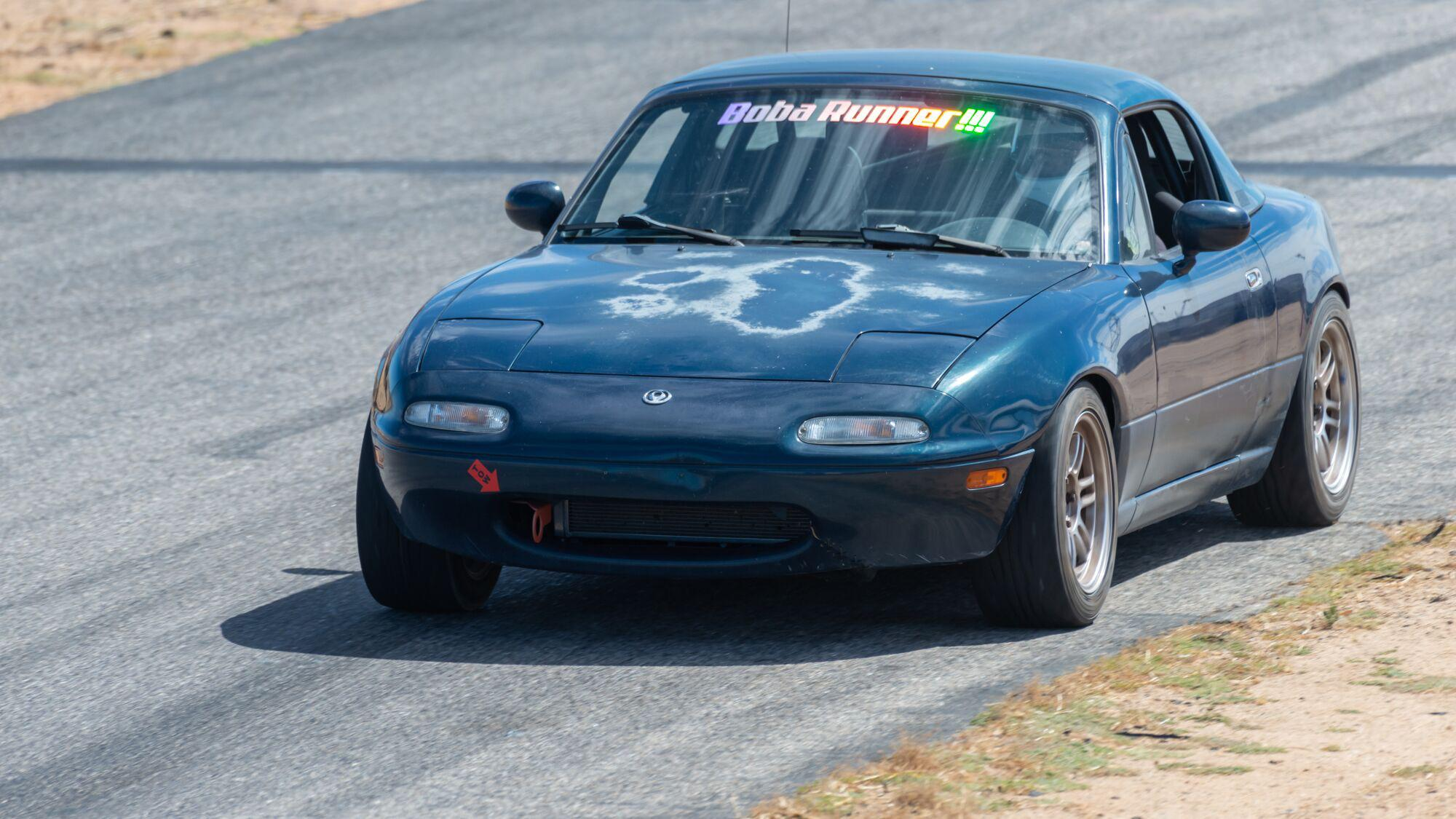
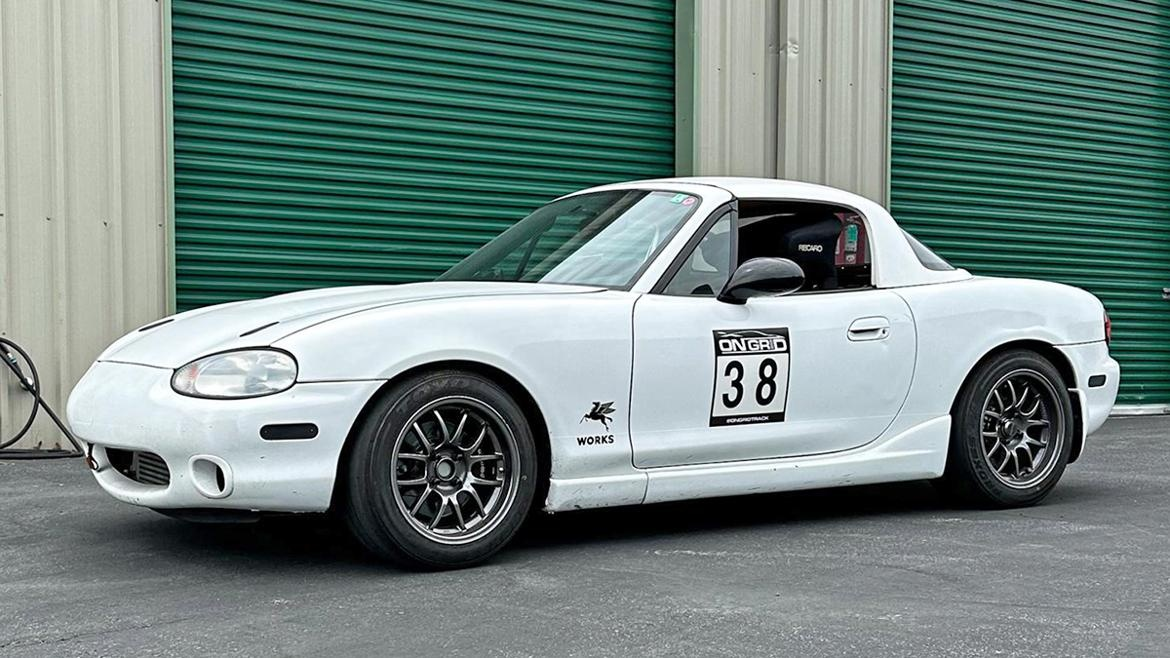
NB 6-speed + 3.90 is shorter through the gears than a 5-speed + 4.10, which can improve pull out of corners. But if that change forces an extra upshift before 60 mph or right before a braking zone, you can give the time back. That’s why autocrossers often like the long-leg 5-speed (fewer shifts), while road-course drivers appreciate the tighter 6-speed spacing.
ND owners, why 6th is 1:1 and still cruises low.
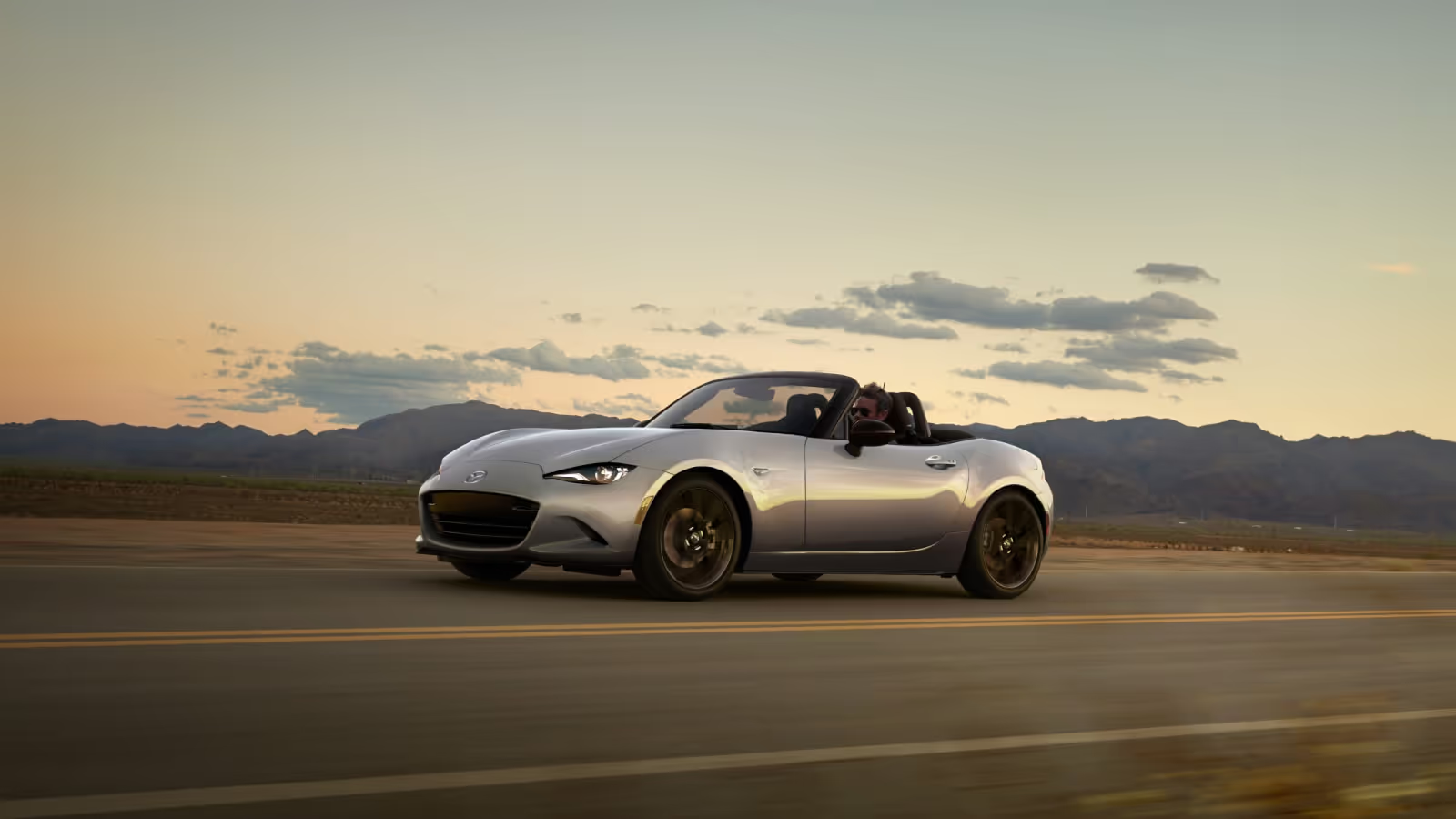
On the ND, 6th gear is actually 1:1, and Mazda achieves the relaxed cruise with a very tall 2.866 final drive. So yes, the tach is low in 6th, but it’s the diff doing the heavy lifting, not a traditional overdrive ratio.
When the 6-speed is worth it (and when it isn’t)
Go 6-speed if you want closer 2nd–4th spacing for canyons or road courses and you plan to pair it with a taller final like 3.636 for real highway relief. Many owners also choose it for a bit of extra strength margin on higher-power builds. Stick with the 5-speed if your life is autocross or quick street pulls where fewer shifts matter more, or if your priority is the lowest possible cruise RPM and you already run a tall final (a 5-speed with 3.636 and the 0.814 fifth can cruise as low, or lower, than some NB 6-speed combos). Also, plenty of folks simply prefer the NA/NB 5-speed’s sweet, simple shift feel.
How to spec it right without overthinking
Start by listing your actual transmission ratios, final drive, and tire diameter. Multiply each gear by the final to get the overall ratios, then use the 336 formula to check RPM at your real cruising speed (65–75 mph). If the change is only ±100 rpm, don’t expect miracles on the highway. Next, map redline road speed in 2nd–4th so you know where you’ll be shifting on your favorite road or track; avoiding an extra shift can matter more than any tiny cruise-RPM win. Finally, match the diff to the box. For NA/NB cars, a 6-speed with 3.636 is the classic “quiet-ish highway, tight lower gears” combo; a 5-speed with 4.30 wakes the car up for track/autox but will raise cruise RPM. Budget for driveshaft/yoke nuances and speedometer correction if you change differentials.
A 6-speed does not guarantee lower highway revs; only a taller overall top does. Sixth isn’t automatically an overdrive either, the ND proves that with a 1:1 top and a very tall diff. And a 6-speed doesn’t make you faster everywhere; on some layouts the extra shift erases the theoretical gearing advantage.
For NA/NB, a 6-speed can absolutely be worth it for track spacing or strength, but pair it with 3.636 if you actually want quieter highway cruising. If you value simplicity, fewer shifts, and a great feel, a well-chosen 5-speed setup remains hard to beat. For NC/ND, the factory 6-speeds are matched smartly to their finals; the ND’s tall 2.866 explains its relaxed cruise despite a 1:1 sixth. Decide based on your powerband, tire size, roads, and events, not on gear count alone.
Cruise RPM Table (uses RPM = MPH × Overall × 336 ÷ Tire DIA)
|
Tire DIA (in) |
Gear Ratio (top) |
Final |
Overall (Top) |
RPM @ 60 mph |
RPM @ 70 mph |
RPM @ 80 mph |
|
22.7 |
0.814 |
4.10 |
3.337 |
2,960 |
3,460 |
3,950 |
|
22.7 |
0.843 |
3.90 |
3.288 |
2,920 |
3,410 |
3,890 |
|
22.7 |
0.843 |
3.636 |
3.065 |
2,720 |
3,180 |
3,630 |


