
Roof-Tent & Overlanding Mods for the MX-5
Mazda gives the MX-5 no roof-load rating. Soft tops can’t take racks, RF panels aren’t load-bearing, and rooftop tents are a hard no. For small overflow cargo, a quality vacuum-cup trunk rack works for a light duffel—but never for a sleeping setup.


Mazda doesn’t rate the MX-5 for roof loads, soft-tops have no factory rack provision, RF roof panels aren’t load-bearing, and the brand is conservative about added loads in general. Treat a roof-mounted RTT on an MX-5 as a non-starter. If you only need a little extra space, a quality vacuum-cup trunk rack is fine for a light duffel, but it’s not for sleeping systems.
Two Sensible Camping Layouts
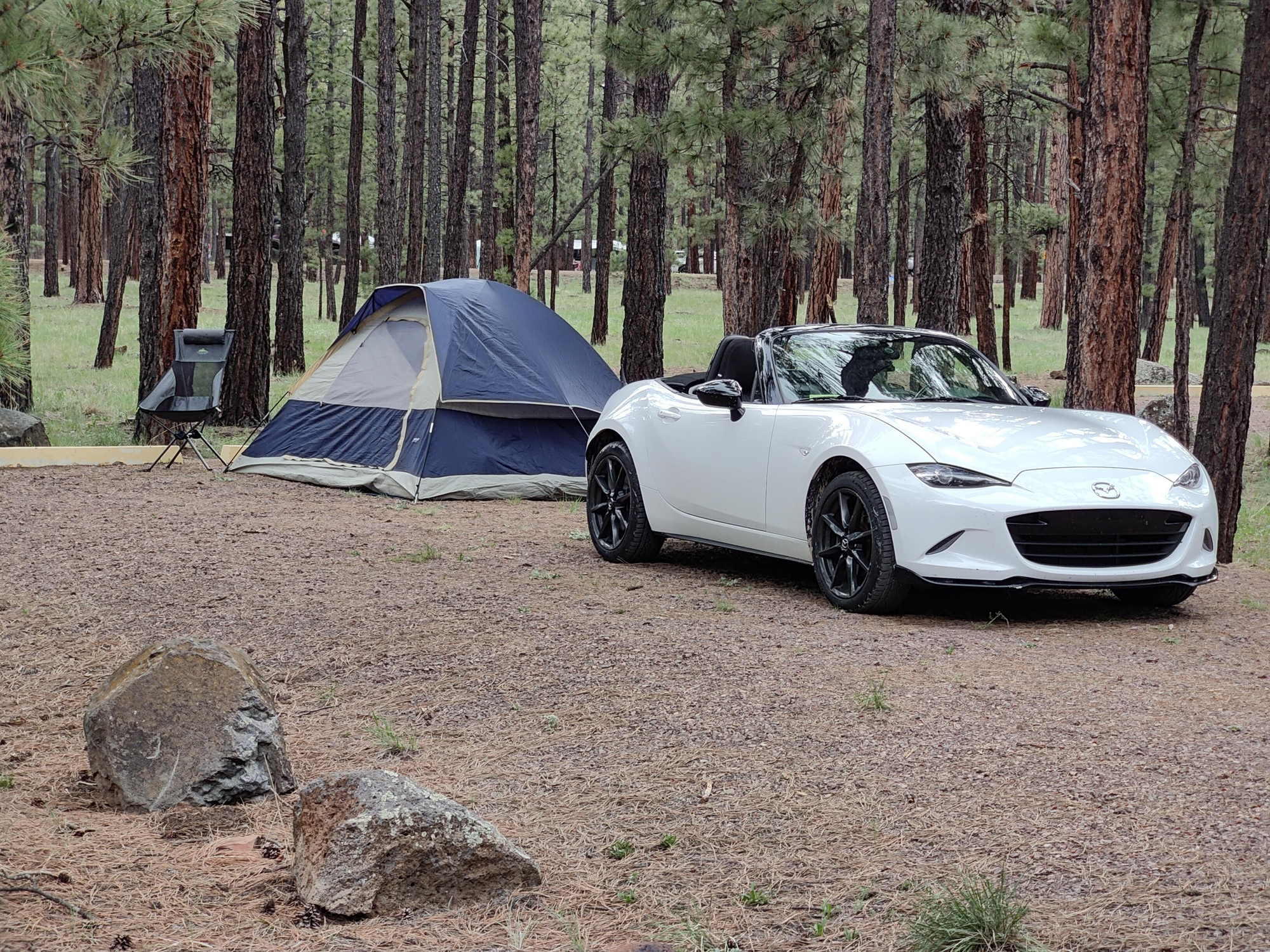
Layout A , Ground Tent + Light Overland Mods. Keep the car light and nimble, run a fast-pitch ground tent, and add modest clearance, an engine skid, and proper recovery points. You’ll reach trailheads without stressing the car or your wallet, and you preserve the MX-5’s handling and efficiency.
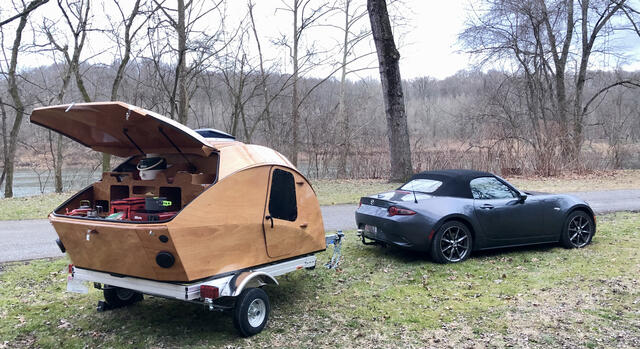
Layout B , RTT on a Micro-Trailer via a Class-1 Hitch. Mount the tent on a tiny trailer so the car stays unladen and you can drop the load at camp. This solves weight, aero drag, and center-of-gravity issues. The big caveat is that Mazda does not publish a tow rating for the MX-5; if you choose this route, you’re accepting that risk and must keep weights truly featherweight.
Trailer & Hitch Basics
Aftermarket Class-1 receivers exist across MX-5 generations. Hardware ratings often read about 200 lb tongue and 2,000 lb gross trailer, but those are hitch limits, not a manufacturer tow rating. Community best practice is to keep tongue weight in the double digits and overall trailer mass very low. Smooth loading, conservative speeds, and an even front-to-rear balance are the name of the game.
Clearance, Tires, and Ride
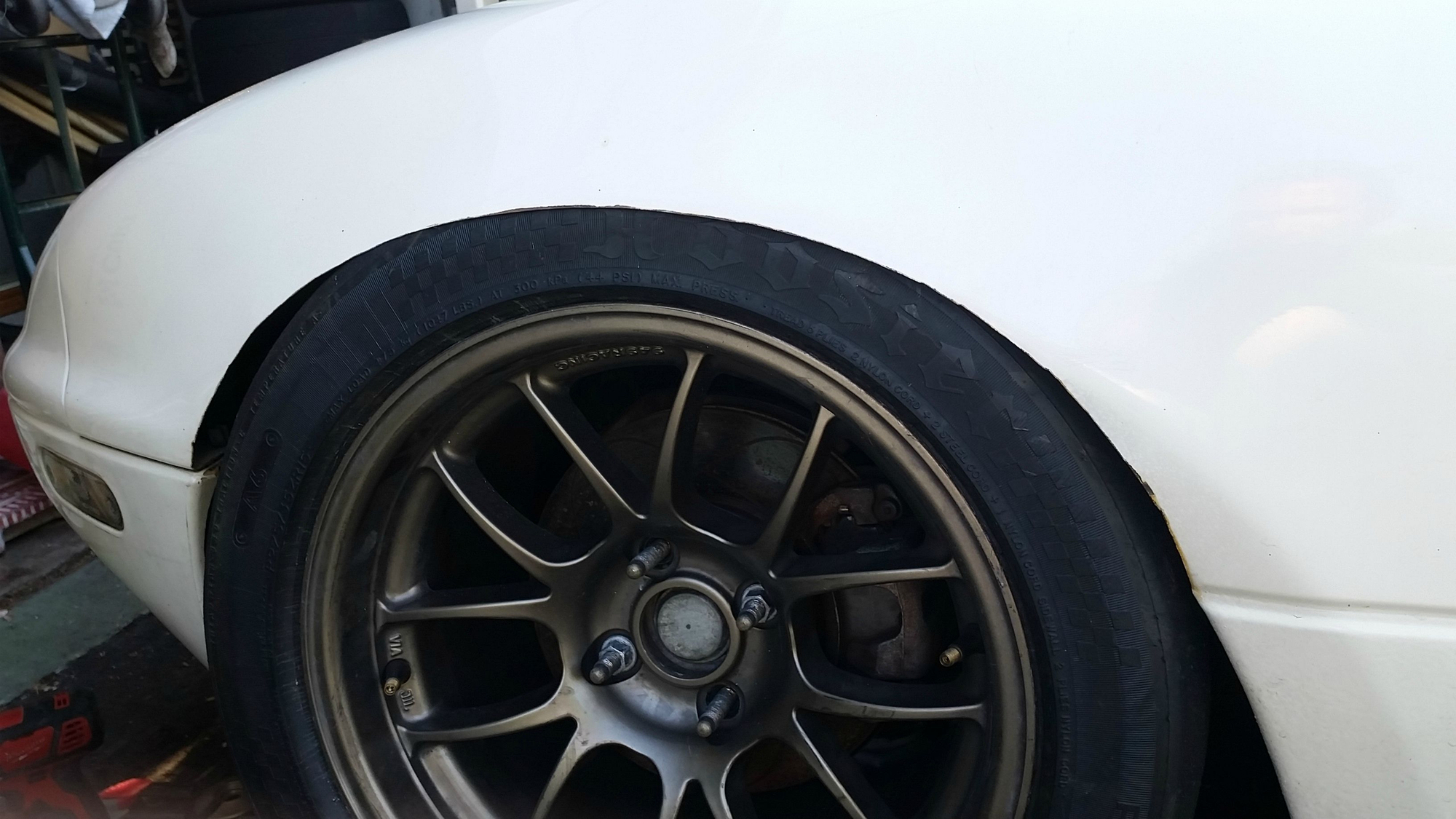
A small lift with slightly taller tires makes dirt roads and washboard dramatically less sketchy. Bolt-on lift kits for NA/NB around three inches increase bump travel and allow roughly 25–25.5 inch overall tire diameter without major body work on most cars. Expect calmer chassis motions, better approach angles, and less pucker over ruts. True all-terrain patterns in Miata sizes are limited, so choose a durable street-biased tire with a strong sidewall. Carry a plug kit and a compact compressor. If you run a trailer, stash a full-size spare on it.
Underbody Protection and Recovery Points
Protect the oil pan and front subframe with an aluminum or steel engine skid. It’s simple insurance that pays for itself the first time you hear a rock ping off something that isn’t the sump. Up front, replace at least one tie-down with a real tow hook or eye. A visible, sturdy attachment point makes a gentle winch or tug quick and safe if you nose into soft ground.
Cargo and Storage That Suit the Car
For the ground-tent layout, a certified vacuum-cup trunk rack is perfect for soft goods under roughly 45 lb. Keep it low and tidy to reduce drag. For the trailer layout, put heavy items, water, tools, recovery gear, spare, on the trailer. If you ever use a hitch basket, mind tongue-weight limits, keep loads compact, and remember that hitch hardware ratings do not magically grant the car a tow capacity.
Power, Lighting, and Camp Comfort
Keep it simple. A compact 12-volt battery box handles phone charging, headlamps, and camp lights without wiring a light bar you can’t mount to a soft-top anyway. Focus on portable LED lanterns and area lights at camp. Less wiring, fewer holes, less noise and drag.
A Conservative Micro-Trailer Spec
Think small and simple: a 4×4 or 4×5 foot aluminum or light-steel platform with rails for the RTT, loaded weight truly light, and tongue weight well under the hitch’s nominal rating (target roughly 50–100 lb). Add a full-size spare and jack on the trailer, secure fuel and water low, and pack so the tongue balance stays consistent as supplies are consumed. Check local brake and lighting rules and drive like you’re towing with a sports car, because you are.
Stage-1 Build Examples
Stage-1 Ground-Tent Setup: Three-inch lift and alignment biased for straight-line stability on gravel; 25–25.5 inch tires; aluminum engine skid; front tow hook; short kinetic rope and soft shackle in the trunk; vacuum-cup trunk rack under 45 lb; quick-pitch ground tent with a good pad and quilt.
Stage-1 Trailer + RTT Setup: Class-1 receiver; ultra-light micro-trailer with RTT mounted low; full-size spare and jack on the trailer; compact 12-volt battery box on the trailer with optional Anderson plug to the car; strict weight discipline and conservative speeds, always mindful that the manufacturer doesn’t rate the car to tow.
What Not to Do
Don’t clamp universal crossbars to a soft-top frame or RF roof panel, they’re not designed for loads. Don’t treat a hitch’s hardware rating as a green light to tow heavy. Don’t overload trunk-lid racks with hard, tall cargo that creates leverage and drag.
If you want to keep the Miata’s spirit intact, go ground tent plus a mild lift, a skid plate, and real recovery points. If you’re set on a rooftop tent, put it on a micro-trailer and keep weights tiny, accepting the manufacturer’s “no tow” stance and the responsibility that comes with it. That’s the compromise that lets you touch dirt roads, sleep comfortably, and still enjoy a Miata that drives like a Miata on the way home.


