
Rally 101 for the Miata Owner
“Rally” for Miata owners usually means stage rallies or TSD road rallies. The MX-5’s light weight, balance, and cheap consumables make it surprisingly capable, but low ground clearance and exposed underbody parts demand smart prep if you want the car to survive rough stages or broken pavement.


When you say “rally” as a Miata owner, you’re usually looking at two families of events: stage-style stuff (closed-road tarmac rallies and hillclimbs) and TSD/road rallies. Stage rallies are run on closed public roads, against the clock, with cars starting at intervals instead of going door-to-door. You get timed special stages linked by transit sections, and you’re managing both speed and reliability across the whole event. TSD events are much calmer on paper, speed-limited and focused on time, navigation, and accuracy, but they can still run on broken pavement, patched roads, and the occasional gravel stretch.
The Miata actually fits this world pretty well. It’s light, has great steering and balance, and runs on cheap consumables with a huge ecosystem of parts and knowledge. The downsides are obvious the first time you look underneath: low stock ground clearance, an exposed aluminum oil pan, and vulnerable radiator, steering rack, and exhaust. Add in a tiny trunk and limited cabin space for spares, and it’s clear you have to be intentional about how you build the car if you want it to survive rally abuse.
Safety, Rules, and Building Around the Cage
Before you obsess about spring rates and alignment, you have to clear the safety and rules hurdle. For TSD and milder road rallies, many clubs will let you run with a mostly stock interior, OEM belts, a mounted fire extinguisher, and helmets if required. It feels more like a structured spirited drive than full-on motorsport.
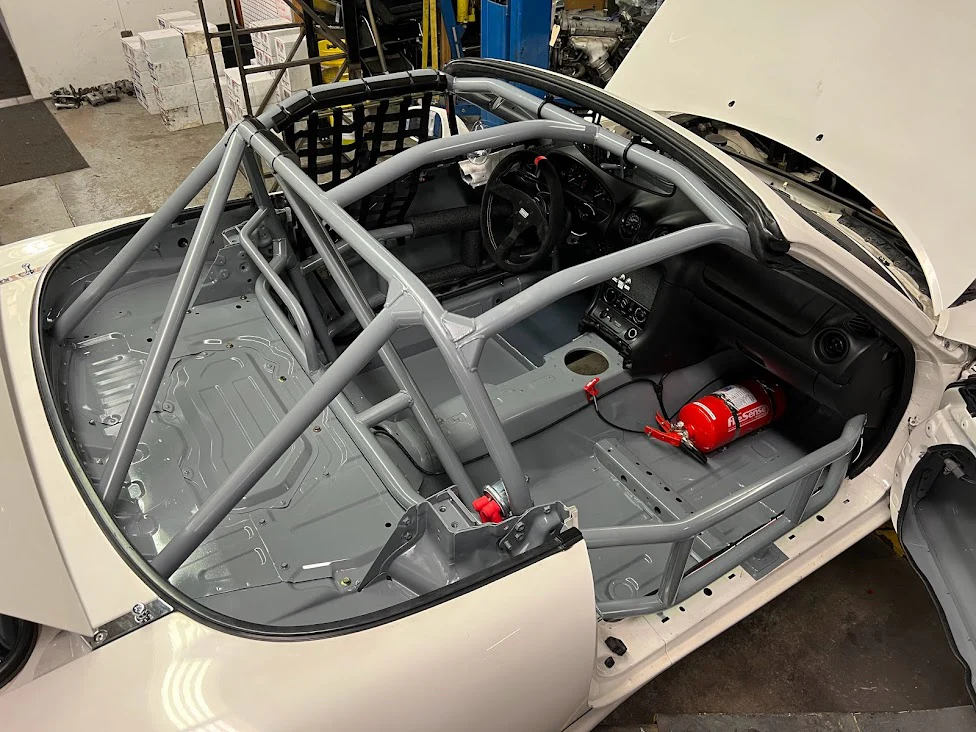
Once you step into stage rallies and serious hillclimbs, the game changes. Most sanctioning bodies will require a proper roll cage built to their spec, fixed-back bucket seats, FIA-rated harnesses, a plumbed or handheld fire system, an external kill switch, and sometimes window nets. A good Miata rally cage will tie into the sills, floor, and bulkheads with multiple points, and often uses NASCAR-style door bars to improve side-impact protection and help spread suspension loads into the shell. The cage doesn’t just keep you safe in a crash; it stiffens the chassis so it can handle rally loads over crests, compressions, and rough patches.
On top of that, you have paperwork and tech to deal with: logbooks for the car, correct mounting of seats and belts, current helmet and suit certifications, and all the scrutineering details. The smart move is to build to the strictest rules you might ever run so you don’t have to redo safety gear later.
Suspension and Alignment for Tarmac Rally
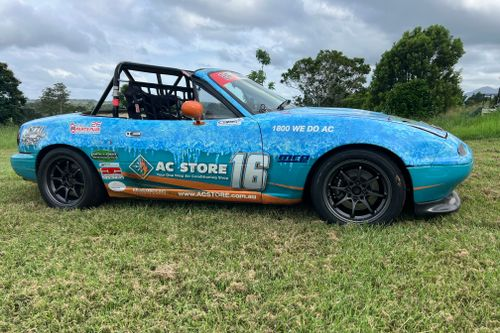
Suspension is where you really separate “track toy” from “tarmac rally tool.” Stock Miata ground clearance sits around the mid-130 mm range, which is already marginal for rally use. For mixed-use TSD and rough-road events, a small lift, around 10 to 20 mm over stock, paired with quality dampers and well-chosen bumpstops goes a long way toward keeping the shell off the deck. For more serious tarmac stages, you can stay near stock height or slightly higher, but what really matters is having coilovers with more travel and sensible valving so the car can take hits without crashing into the stops.
Spring and damping choices should follow the “rally is softer than track” rule. If your typical NA/NB track setup is in the 500–700 lb/in front spring range, dropping stiffness by 10–20% for rough tarmac makes the car more compliant and keeps tires planted over bumpy sections. You still want strong low-speed damping to control roll, pitch, and dive, but you don’t want to overdamp high-speed motion, or the car will feel skittery and harsh over bad tarmac.
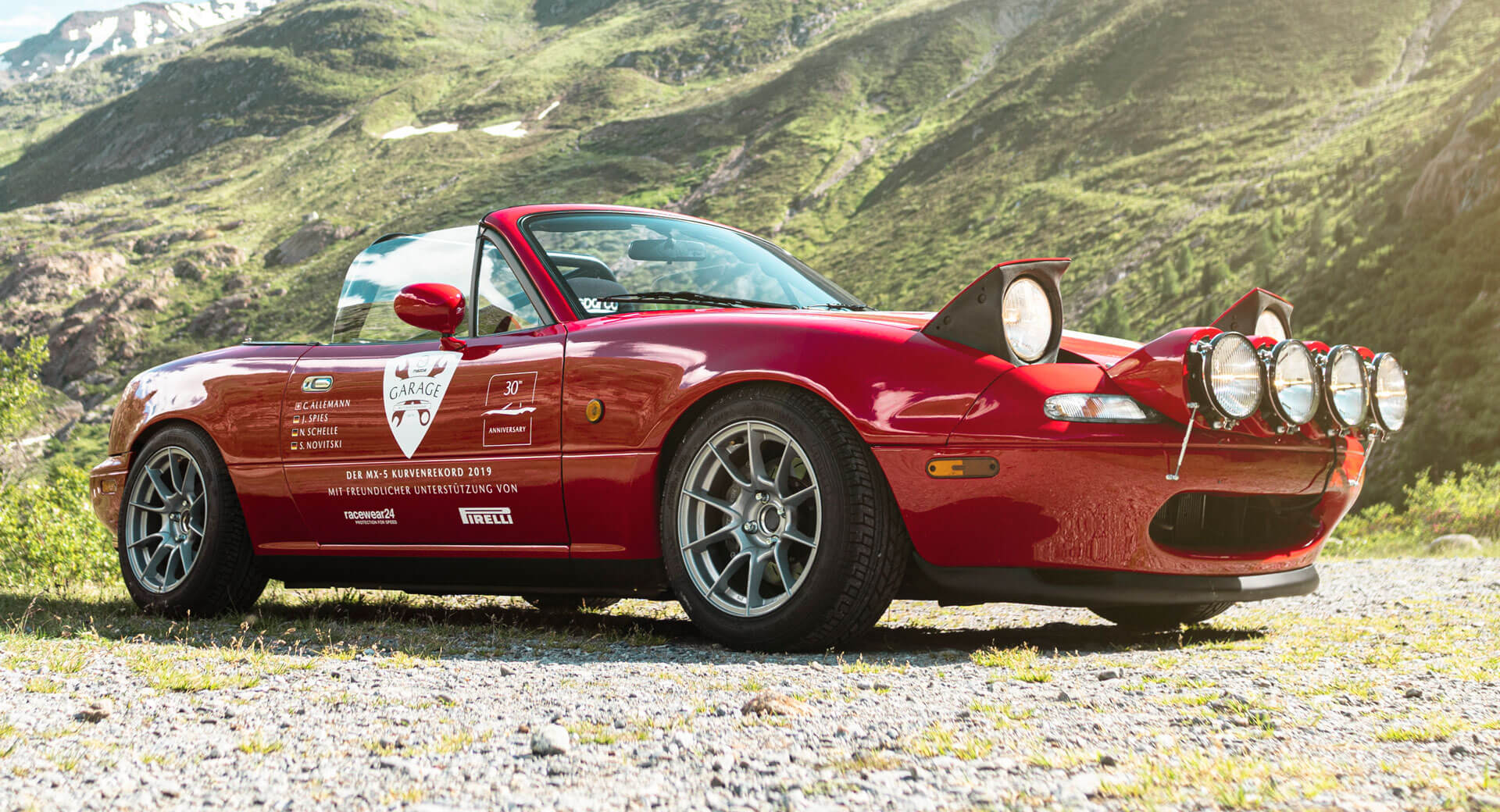
Anti-roll bars are another place people overdo it. Giant front bars that feel awesome on a glass-smooth circuit can cause inside front wheel lift and ugly understeer on crests and uneven surfaces. A good rally-biased setup often uses a modestly stiffer front bar with a near-stock or even softer rear bar to prioritize traction out of slow, bumpy corners.
For alignment, you’re walking a line between responsive turn-in and stability on rough, high-speed sections. A sensible streetable tarmac/TSD baseline might be around –1.5° to –2.0° front camber, –1.0° to –1.5° rear camber, with zero or a hint of toe-out at the front and mild toe-in at the rear. For more committed tarmac stage setups, you might push front camber toward –2.5° to –3.0° and rear to –1.5° to –2.0°, keeping toe settings conservative so the car stays calm over crests and mid-corner bumps.
Tires and Wheels That Can Take Abuse
Tires are where your setup meets the road, literally. For lighter-duty TSD and club tarmac events, aggressive 200TW “extreme performance” street tires can work well. They’re grippy and decent at taking heat cycles, but they’re not as robust as true rally rubber. Dedicated tarmac rally tires bring stiffer sidewalls, reinforced construction, and better cut resistance, which matters a lot when you’re hammering through broken pavement and debris.
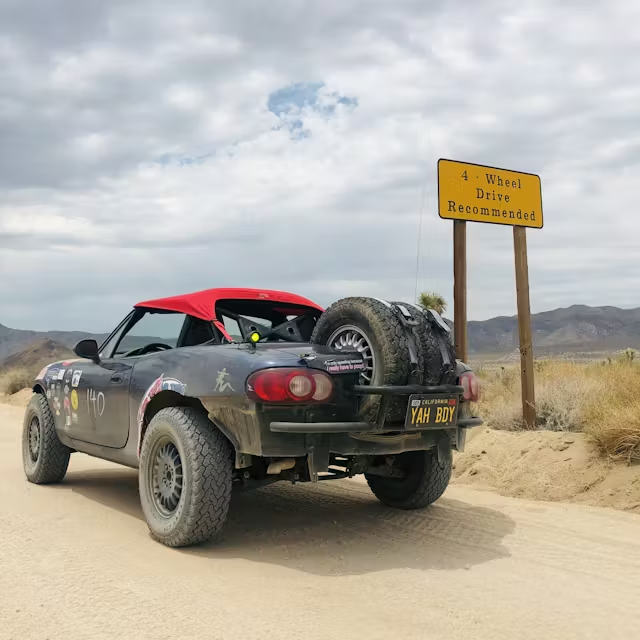
Wheel and tire sizing depends on the generation. NA/NB cars are very happy on 15x7 or 15x8 wheels with 205/50 or 225/45 tires. ND cars work well on 17x7.5–8.0 wheels with 215/45 tires, a combo that aligns with a lot of spec and club setups. Across all generations, slightly taller sidewalls than a track-only setup help absorb impacts and protect the wheels.
Wheel strength is non-negotiable. Ultra-light, thin-spoke track wheels that survive curbing can still crack or bend fast when they meet deep potholes at rally speeds. You want designs with solid, beefy spokes and good load ratings, and you should accept a bit of extra wheel weight as the cost of not having to retire on a bent rim.
Underbody Protection and Skid Plates
If there’s one thing that turns a Miata from “fun but fragile” into “happy to hit rough tarmac,” it’s proper underbody protection. The basic reality: the car is low, and a lot of critical components live very close to the ground. Without skid plates, you’re one bad compression away from a cracked oil pan or bent crossmember.
Most rally-style Miata builds start with a front skid plate that covers the sump and front subframe area. A common formula is 4–6 mm aluminum for the main plate, thick enough to take serious hits while still staying reasonably light. Steel or heavy-duty plates are saved for smaller guards that protect the steering rack, differential, or fuel tank, where strength matters more than unsprung weight.
Good plate design is as important as thickness. You want a smooth leading edge so the car slides instead of digging in, minimal cutouts to avoid weak points or snagging, and mounting points tied into frame rails, subframe bolts, and reinforced crossmembers rather than thin sheet metal. From there, you can expand protection to cover the transmission tunnel, fuel and brake lines, and vulnerable sections of exhaust. Optional extras like rock sliders and headlight film give you a bit more margin when you misjudge a ditch or catch flying stones.
Body, Interior, and Systems for Rally Use
Once the structure and underbody are sorted, you can start cleaning up the rest of the car for rally life. Big flexible mudflaps are more than a style choice, they keep gravel, mud, and debris from sandblasting your sills and rear bumper, and help protect following cars too. Inside the wheel wells, simple stone guards and liners can shield brake lines and wiring from heavy spray and rocks.
Lighting and electrical systems matter more than most track folks expect. Tarmac rallies and hillclimbs can run into dusk or full darkness, and having a well-thought-out auxiliary lighting setup makes a massive difference in confidence. Whether you go for bumper-mounted LEDs, a light bar, or roof pods, the wiring should be done with relays, proper fusing, sealed connectors, and clean routing. It’s also worth planning for serviceability: make sure you can reach fuses and relays quickly, swap a bulb on the side of the road, and diagnose a simple electrical fault without disassembling half the car.
Cooling and brakes are endurance problems in rally, not single-lap problems. You need high-boiling-point brake fluid and pad compounds designed for repeated medium–heavy braking rather than a few absolute peak stops. Brake ducting can help on longer stage events, but you have to be careful it doesn’t conflict with skid plates and undertrays. On the engine side, verify that any added protection doesn’t choke radiator airflow, and consider a slightly larger radiator or better ducting if you’re adding weight with a cage and carrying more speed for longer.
Powertrain and Driveline
The temptation with any build is to chase power first, but for a tarmac rally Miata, that’s rarely the bottleneck. The car is light and inherently traction-limited on narrow, broken roads; throwing a bunch of extra horsepower at it often just makes it harder to drive and easier to break.
A much better starting point is a healthy, mostly stock engine with a conservative tune. Prioritize safe air–fuel ratios, modest ignition timing, and keeping coolant and oil temperatures in a comfortable range. Reliability upgrades like a better radiator, maybe an oil cooler in hot climates, and improved ducting give you headroom to push without flirting with overheating.
On the driveline side, a limited-slip differential is almost mandatory for rally-style driving, whether it’s a factory Torsen or an aftermarket unit. You’ll also want to pay attention to breathers for the diff, gearbox, and power steering, routing them higher and away from spray helps prevent fluid from escaping under prolonged high-load runs.
A rally Miata doesn’t have to be some wild, tube-framed monster. It’s usually a series of smart, phased upgrades with one core goal: finish the event. The easiest path is to start with safety and underbody protection, then move into suspension and alignment, and only then think seriously about power.
Step one is always to read the rulebook for the events you want to enter and build to the strictest set of rules you’re likely to encounter. Step two is to talk to local competitors, especially anyone already running a Miata or similar light RWD car, so you can learn what breaks on your region’s roads and what survives. From there, everything you add to the car should answer one of three questions: does this help us stay safe, does this help us finish, or does this help us go faster without hurting the first two? If you keep finish rate as your main metric, the car will end up fast enough on its own.


