
ND Miata-Specific Maintenance Schedules
Unlike NA/NB cars, the ND runs a DI Skyactiv-G engine, long-life FL-22 coolant, 75k iridium plugs, and a built-in oil-life monitor. Factory intervals stretch to 10 years/120k miles, with region-based variations—so ND owners should follow ND-specific schedules.


The ND really does deserve its own maintenance guide. A lot of “Miata maintenance” advice out there is written with NA/NB in mind: simpler port-injection engines, shorter coolant intervals, lower redlines, and no oil-life algorithms. The ND is different. You’re dealing with a direct-injection Skyactiv-G, long-life FL-22 coolant, 75k-mile iridium plugs, and factory tables that go out to 10 years and 120k miles. On top of that, the car has a maintenance monitor that tracks oil life and throws a wrench light, and the official schedules change slightly depending on where you live.
How Mazda Structures ND Maintenance
Mazda’s maintenance monitor is supposed to be your front-end for the whole schedule. It quietly keeps track of how you drive, then lights the little wrench in the cluster and shows a message when service is due. Officially, you’re meant to get the car serviced within about 1,000 km / 600 miles or roughly two weeks after that wrench appears. The owner’s manual lets you pick between “Flexible” and “Fixed” modes. In Flexible, the car uses an algorithm based on time, distance, load, and temperature, but it still has a hard cap of around 7,500 miles or 12 months. In Fixed, it just counts straight mileage and time without trying to be smart. Either way, the catch is that the oil-life data needs to be reset after each oil change; if the shop never resets it, the whole system becomes meaningless. MyMazda and dealer apps basically mirror this in phone-notification form.
Mazda splits the official schedule into “normal” and “severe” service. Normal (often called Schedule 1) assumes moderate climate, decent roads, and drives long enough to fully warm the engine. Severe (Schedule 2) is basically real life for a lot of people: dusty roads, lots of short hops, very hot or very cold weather, extended idling, mountain driving, towing, and track use. A commuter in a mild climate doing 20–40 minutes each trip is usually fine on Normal. A short-trip city ND that sees heat, traffic, or autocross days should be treated as Severe. The main difference is how often you change engine oil and manual-trans oil; big-ticket items like coolant and plugs stay at the same long intervals either way.
Engine and Fluids
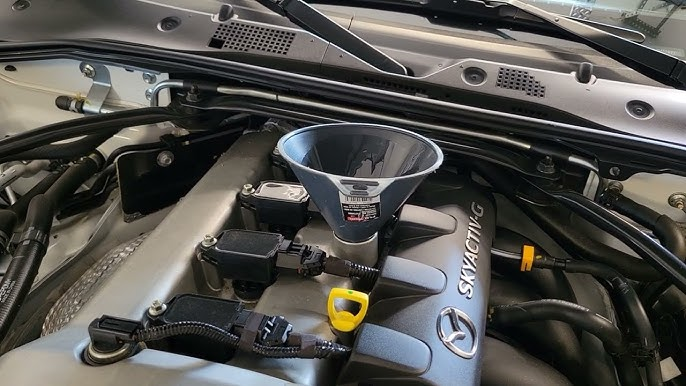
For oil, Mazda expects you to stick with a full synthetic 0W-20 that meets their in-house spec. In flexible mode, the ECU tracks how you drive and will bring the wrench light up early if your usage is severe, but it will never let you go more than about 7,500 miles or a year. A lot of owners don’t actually wait that long. In hot climates, on short-trip cars, or on NDs that live at track days and autocrosses, 5,000-mile oil changes are cheap insurance. Some track-focused drivers step up to a 5W-30 or a higher-temp-rated oil for more margin when oil temps climb; warranty-conscious folks just stay with 0W-20 and shorten intervals instead. ND2s, with their 7,500-rpm redline, benefit especially from fresh oil if you’re regularly visiting the top of the tach.
The engine air filter gets inspected pretty much every time the car is in for service, and the official replacement interval lands around 56,000 km (35,000 mi) or three years. In quiet, paved-road use that’s usually fine. In dusty areas or if you spend time on gravel, dirt, or construction zones, you’ll probably want to swap it much earlier, 15–20k miles is not overkill. Symptoms of a clogged filter are subtle but real: the car feels a bit flat, fuel economy drifts down, and sometimes the idle will seem lazier. OEM paper filters work well; drop-in performance filters are also fine if they’re cleaned correctly and not over-oiled to the point of contaminating the MAF.
Fuel System
Officially, Mazda just asks you to inspect fuel lines and hoses at multi-year intervals and doesn’t schedule any routine injector service. With direct injection, the injectors are living in the combustion chamber, so carbon buildup is more of a valve and intake-port problem than a “dirty injector” problem. In practice, running high-quality fuel and occasionally using an injector cleaner is plenty for most cars. A real injector cleaning or replacement is something you only consider if you see rough idle, misfire codes, or poor running that diagnostics trace back to the fuel system.
Spark Plugs
The ND’s iridium plugs are long-life parts, with a 120,000-km (75,000-mi) replacement interval in the book. That’s realistic for stock, gently-driven cars. If you’ve tuned the engine, track it regularly, or just want a little extra margin, you can pencil in a mid-life plug change around 60k miles. Staying close to the OEM heat range is smart for stock output; more extreme builds sometimes step colder, but that’s a “follow your tuner’s advice” situation. Worn plugs show up as hesitation under load, random misfires, or rough cold starts, and the ND’s ECU will usually throw a code long before things get catastrophic.
Cooling System and Coolant
The ND uses FL-22 long-life coolant, which is an OAT-style formula designed to play nicely with aluminum. Mazda gives a very long first interval, 192,000 km (120,000 mi) or 10 years, then halves it to 96,000 km (60,000 mi) or five years after the first change. Those numbers match what you see across modern Mazdas and are part of why the tables look so “set and forget.” Enthusiasts often shave a bit off that first interval and go closer to eight years just to keep corrosion protection high, but you don’t have to obsess if the coolant level is stable and the fluid looks healthy. What you should do every year is pop the hood, check the expansion tank level, look over the hoses for bulges or soft spots, make sure the radiator isn’t packed with leaves and bugs, and confirm both cooling fans spin up properly.
PCV, Breathers, and Oil Checks
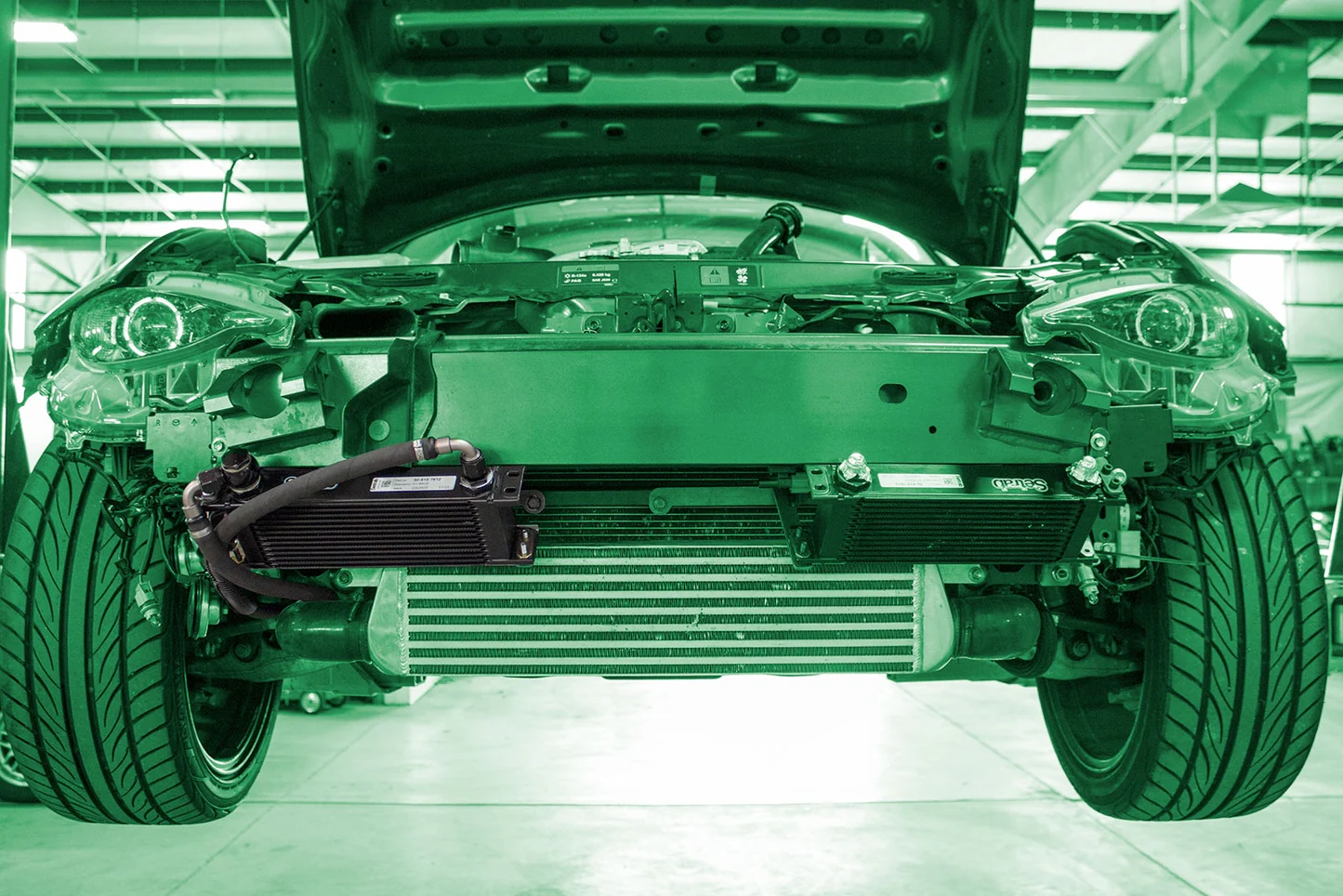
Buried in the maintenance table is a generic line about checking emission hoses and tubes, which is basically your PCV and breather system. On an ND that gets driven hard, crankcase ventilation matters for oil control and for keeping the engine from pushing oil where it doesn’t belong. The simplest habit is an old-school one: check your oil level on flat ground every fill-up or at least once a month. NDs that see a lot of highway or high-rpm use can burn a little oil between changes and still be perfectly healthy. As long as you top it up and keep the level in the safe range, you’re doing what Mazda expects.
Transmission and Differential
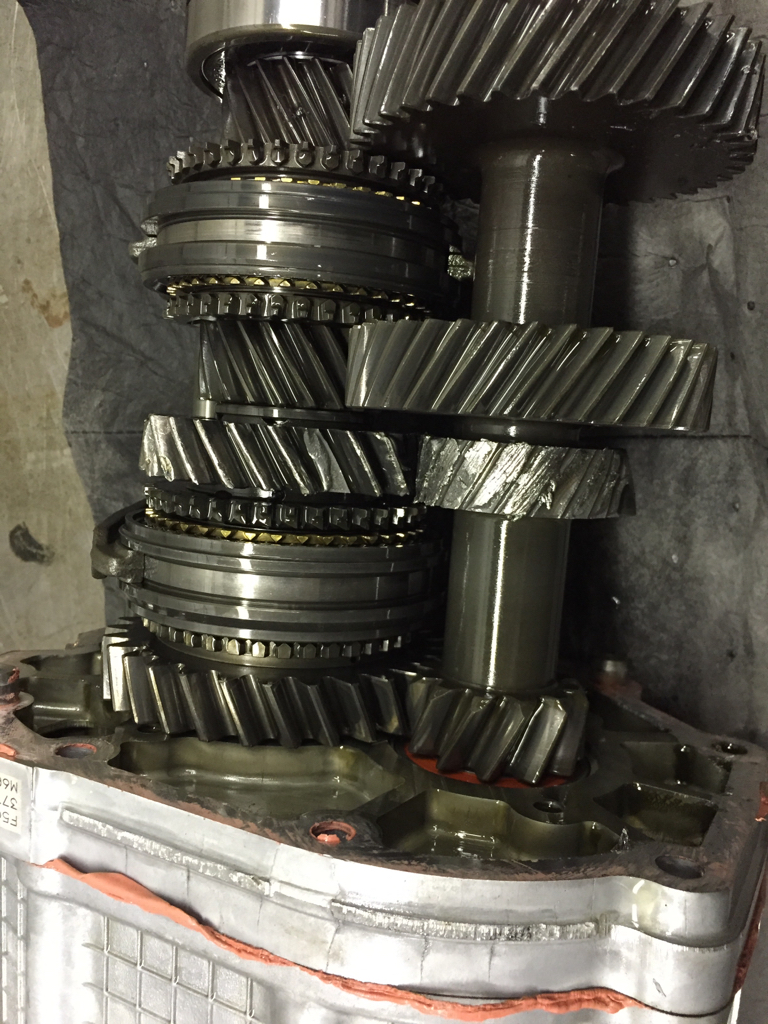
On paper, the ND’s manual transmission fluid is a 96,000-km (60,000-mi) or four-year item in normal service, with that interval cut roughly in half for severe use. In the real world, the ND’s gearbox has a bit of a reputation for being sensitive to fluid condition and type, especially in early ND1s. Many owners treat 30k miles as the “first change” and then repeat that 30–40k-mile cadence regardless of how Mazda labels their driving. The transmission wants a GL-4 75W-90 oil so the synchros stay happy; GL-5 gear oils are generally reserved for the differential, not the gearbox.
The maintenance chart usually treats the rear diff as a “lifetime” fluid under normal conditions, with a specific call-out to replace the oil if the car has been submerged. Owners who crack the drain plug at 30–60k miles often find very dark fluid, especially if the car has seen track days, autocross, or a lot of spirited driving. This is why so many people simply add “diff at 30–40k mi” to their personal schedule. The diff uses a GL-5 75W-90 gear oil, and it’s convenient to service it at the same time as the transmission so you’re only under the car once.
Clutch Hydraulics and Wear
On most NDs, the clutch shares the brake fluid reservoir, so a brake-fluid flush also refreshes the clutch hydraulics. Planning a flush every two years is a solid baseline for street cars and keeps master and slave cylinders happy; track cars might want more frequent attention. As for the clutch itself, it’s a long-life item. Street-driven NDs can easily see 80–120k+ miles before they need a clutch, while cars that see a lot of hard launches or competition will be on the lower end of that range. You can keep an eye on clutch health by watching for slip in higher gears, listening for odd noises when you depress the pedal, and noticing if the engagement point moves dramatically over time.
Brake Fluid
Mazda’s own guidance will often tie brake-fluid changes to distance or severe-use conditions, but enthusiast practice is simpler: just treat brake fluid as a two-year item on any car you care about. Brake fluid slowly absorbs moisture, which drags down boiling point and slowly corrodes internal components. For track cars, the interval shrinks again, some people flush every season or even multiple times a year if they regularly cook the brakes.
Pads, Rotors, and Calipers
The tables tell you to inspect disc brakes at each service, and that’s exactly what you should do. That means checking pad thickness, making sure the pads aren’t wearing at a weird angle, looking at rotor faces for deep grooves or blue heat spots, and making sure caliper slide pins move smoothly. Cars with the factory Brembo front package can eat front pads quickly on track, so it’s smart to check before and after events. In some markets the ND uses an electric parking brake, which changes the service procedure when you retract pistons; in others you get a normal handbrake with a more straightforward setup. Either way, a quick visual inspection at each oil change goes a long way.
Alignment and Tire Wear
Tire rotation every 7,500 miles fits the official pattern and also gives you a natural moment to think about alignment. For most ND owners, checking alignment every two or three years is fine, with extra checks after big pothole hits or any curb incidents. A conservative factory alignment gives good tire life and predictable handling, while more aggressive street/track settings trade rubber for grip. Either way, the tires will tell you if something is wrong: inner-edge wear points to too much camber or toe-out, outer shoulder wear leans toward underinflation or hard cornering, and center wear usually means pressure is too high.
Tires and Wheels
Tires are where all your alignment, suspension, and driving style show up. Mazda’s official line is to rotate them every 12,000 km (7,500 mi), with front-to-rear swaps on square setups and no rotation at all if you’re running a staggered combination. Keeping an eye on pressures weekly or at least monthly will do more for your tire life than almost anything else; starting with the door-jamb recommendation and tweaking a little for feel and wear is a good approach. For replacement, think in terms of tread depth and conditions: around 4 mm is a good point to start planning new tires for wet-weather safety, lower than that is sketchy in heavy rain, and track-focused drivers may have their own higher thresholds.
Wheel-wise, it pays to torque your lug nuts correctly and re-check them 50–100 km after a wheel change, especially if a shop just hammered them on with an impact gun. It’s also worth a quick inspection for corrosion, damaged studs, or cracked wheel finishes when the wheels are off.


