
Miata Track Performance Breakdown by Generation


1st Generation: Light, Simple, Rewarding
The original formula is all about low weight and great suspension geometry. With the 1.6 or 1.8 BP engine, five-speed, and true double wishbones, the NA feels featherlight and playful. On track it rewards smooth inputs and momentum driving and remains cheap to maintain thanks to simple systems and incredible parts availability. The main liabilities are age and heat: thin stock radiators struggle in hot lapping and high-grip tires expose front hub/bearing weaknesses.
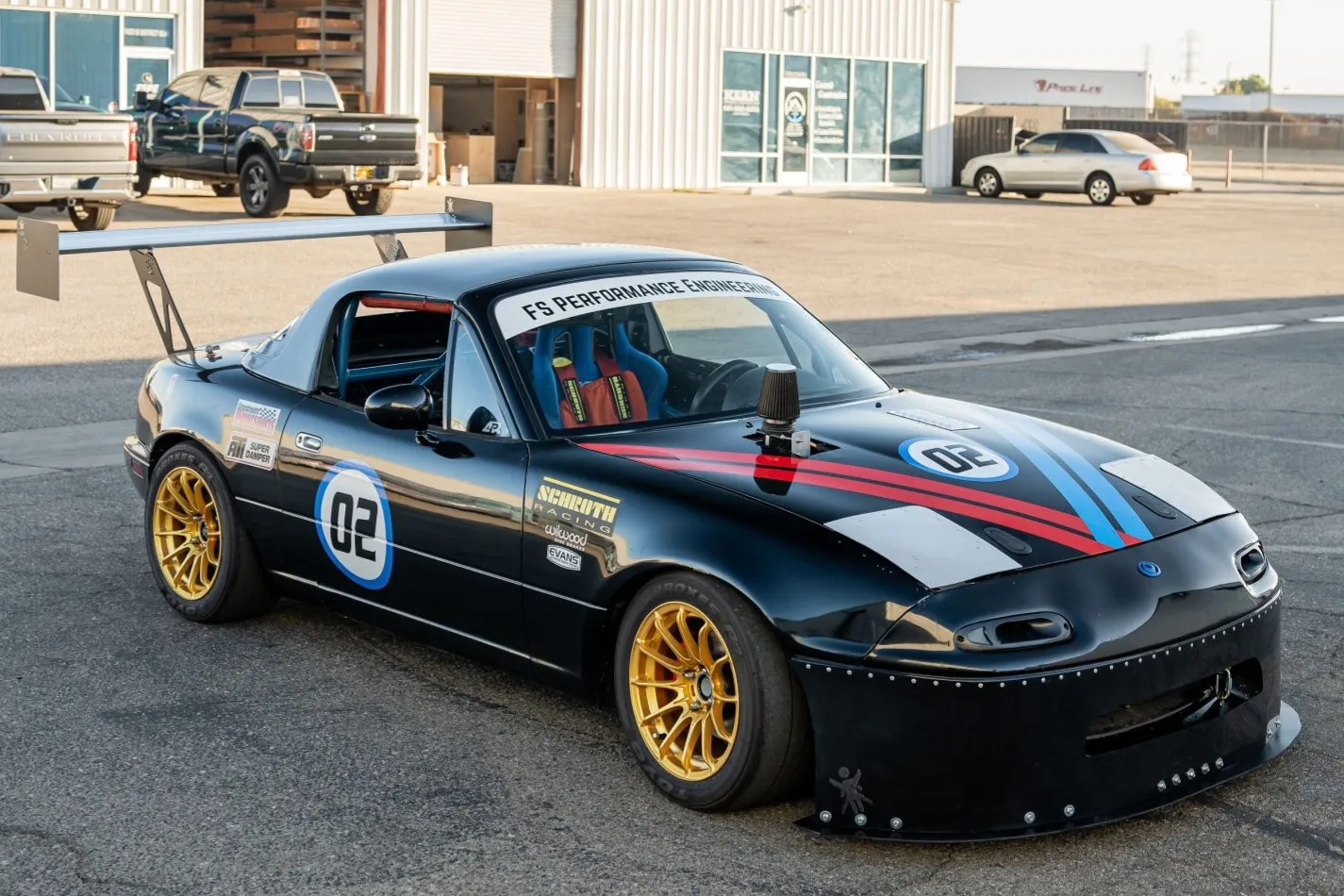
Must-do mods (NA): Track pads, high-temp fluid, stainless lines; performance alignment (start around −2.5° camber front/−2.0° rear), quality monotube coilovers, premium front hubs or tapered-bearing solutions, modern radiator with sealed ducting/shrouded fans, and a roll bar. Add an oil pan baffle if you’re running sticky tires and long sweepers.
NB Miata: The Value Sweet Spot
Think “NA, but better sorted.” Brakes are stronger, the chassis is a touch more refined, and NB2 (2001–2005) adds VVT and useful tweaks. It’s still light, still twin wishbone, and still incredibly well supported by the aftermarket. The common track gremlins mirror the NA: front hub longevity on sticky 200-tw tires and oil temperature control as pace rises.
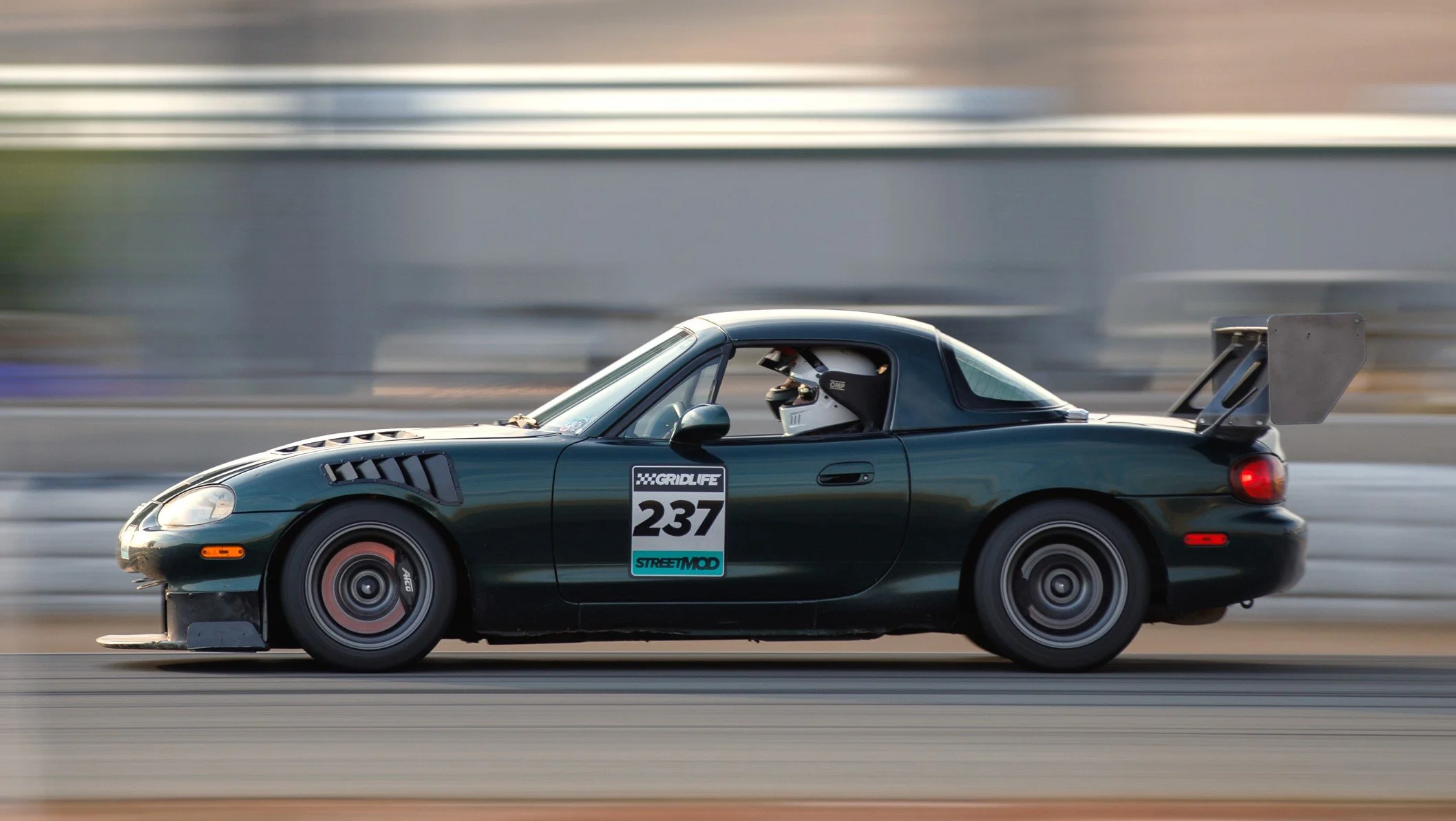
Must-do mods (NB): Everything from the NA list plus a hub/bearing strategy (premium hubs or race conversions), a thermostatic oil cooler for hot climates or sustained sessions, and the same alignment/coilover baseline. If you plan to race in Spec Miata, the NB (often NB2) is the obvious pick.
NC: Modern Geometry, Friendly Packaging
The NC is a new platform with a wider track, 2.0-liter MZR, front double wishbone and rear multi-link, and more space for brakes, tires, and cooling. It carries a bit more weight than NA/NB but gives it back with better kinematics and packaging. It’s also the backbone of the Spec MX-5 class, which means current parts pipelines, setup knowledge, and an easy path to wheel-to-wheel if you want it. Track reliability is strong once you address oil control at higher grip levels.
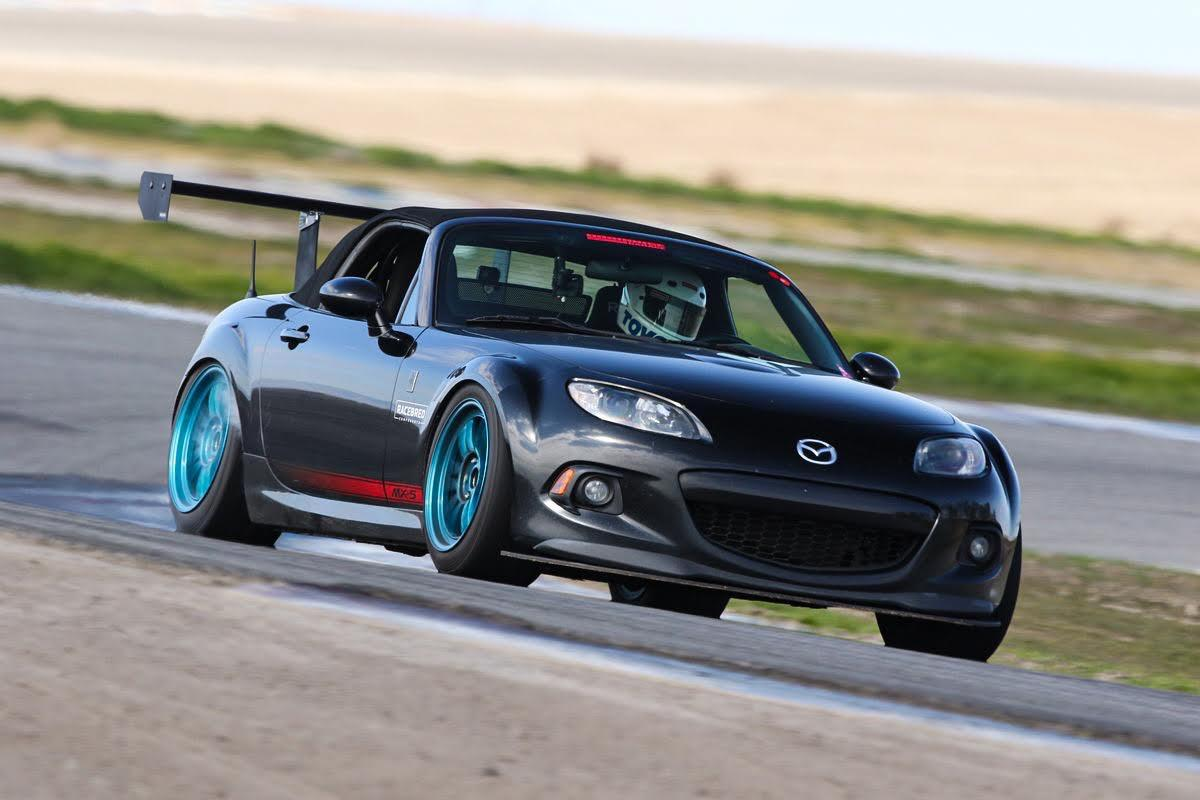
Must-do mods (NC): Track-capable pads/rotors/fluid/lines; quality coilovers and a square tire setup; solid track alignment; baffled oil pan if data shows pressure dips in long sweepers; and a radiator/ducting upgrade in hot climates. If your trim lacks LSD, budget for one.
ND: Fastest Stock, Most Refined
The ND brings the stiffest shell and the best out-of-the-box damping, especially on later cars. ND2’s revised 2.0 is livelier and pairs well with factory Brembo/Club packages that hold up to serious lapping with only pads and fluid. The two caveats are well known: early manual transmissions (2016–early 2017) had durability concerns in hard use, and high-grip, high-G running benefits from oil control measures and vigilant fluid service.
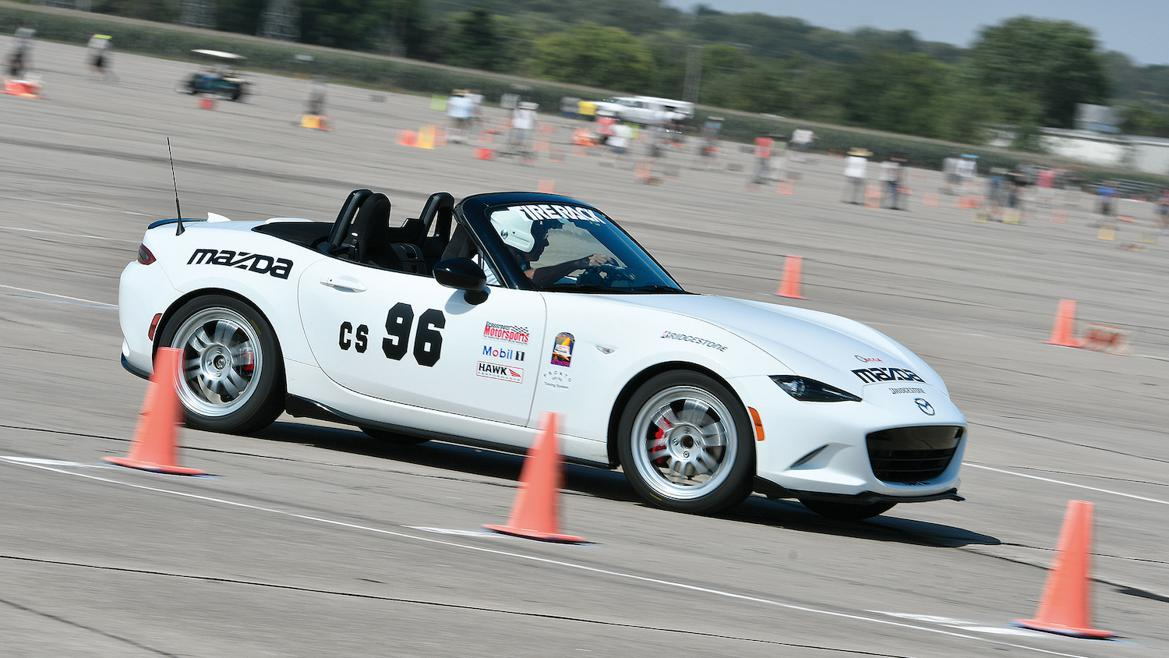
Must-do mods (ND): Track pads/fluid, square wheel/tire package, aggressive but tire-friendly alignment, and an oil baffle for heavy lapping. Favor ND2 when shopping; on early cars, verify updated transmission components and keep on top of fluid temps and intervals. For heat-intensive tracks, a thicker radiator and subtle brake cooling are smart upgrades.
Best Base for a Track Build
If you’re building a dedicated, budget-sane track car today, the NC is the most balanced choice. You get modern suspension geometry, room for proper cooling, easy tire/brake packages, current spec-series support, and fewer 25–35-year-old-car headaches than NA/NB, without paying ND money. If you plan to run Spec Miata, an NB (often NB2) is the right call because it fits the class with massive fields and cheap consumables. If you want the quickest dual-purpose street/track car and can spend more up front, a ND2 Club/Brembo is superb, just add pads/fluid/alignment and mind oil control for sustained track work.
Must-Do Modifications
Brakes and Heat Management: Track pads, fresh high-temp fluid, stainless lines, and sealed front ducting where feasible; modern aluminum radiator with shrouded fans and proper ducting for hot climates.
Alignment and Tires: Start near −2.5° front/−2.0° rear camber with minimal toe, then tune to wear and feel; run a square 200-tw tire setup sized to your wheel wells.
Suspension: Quality monotube coilovers, modest sway tuning to keep platform flat without killing mechanical grip.
Oil Control and Reliability: Baffled oil pan as pace and grip increase; keep oil at the correct level, monitor temps/pressure; NA/NB need a premium front hub strategy and quality studs; NC may need baffling on long high-G corners; ND benefits from an oil baffle and verified transmission updates where applicable.
Safety: Roll bar or cage per your events, proper seats/harness/HANS, current helmet, and a clean tech sheet.
NA: Lightest classic feel and the cheapest consumables; watch hubs and cooling; ideal for momentum driving and grassroots racing.
NB: The refined classic, great parts ecosystem, strong Spec Miata pathway, same hub/oil-temp watch-items; NB2 is the pick.
NC (Editor’s Pick): Best value for a modern-feeling dedicated track build, easy cooling, tire/brake packages, and spec-series support.
ND: Fastest stock and most refined; ND2 preferred; add oil control for heavy lapping and verify early gearbox updates if shopping used.


