
Miata Parts-Bin Magic: Cross-Compatible Mazda & Ford Components
Mazda’s B/BP and MZR/L-series engines give NA–NC Miatas broad parts interchange. Long/short blocks and many ancillaries cross over from Mazda and Ford donors, as long as you keep Miata-specific pans, mounts, triggers, and intake/exhaust. This guide maps the swaps, fit notes, and smart donor picks.


Mazda’s engine families are the gift that keeps on giving. The NA/NB Miatas live in the Mazda B/BP world, while the NC moved to the Mazda L-series (often called MZR and sold by Ford as “Duratec”). Because these engines were used across multiple Mazda compacts and Ford models, you get real interchange for long/short blocks, internals, and many ancillaries. The catch is packaging and electronics: the Miata’s longitudinal layout and trigger logic mean you still need Miata-specific oil pans, pickups, mounts, intake/exhaust, and the right sensors. Get those right and you can stretch your budget with smart donor shopping.
This guide covers engines (short and long blocks plus internals), key accessories like alternators and pumps where interchange is credible, airflow/MAF notes that Miata owners lean on, clutch and flywheel logistics, and the NC 2.5-liter donor ecosystem. It does not cover ND/Skyactiv items or cosmetic/trim swaps.
Engine Families and Prime Donors
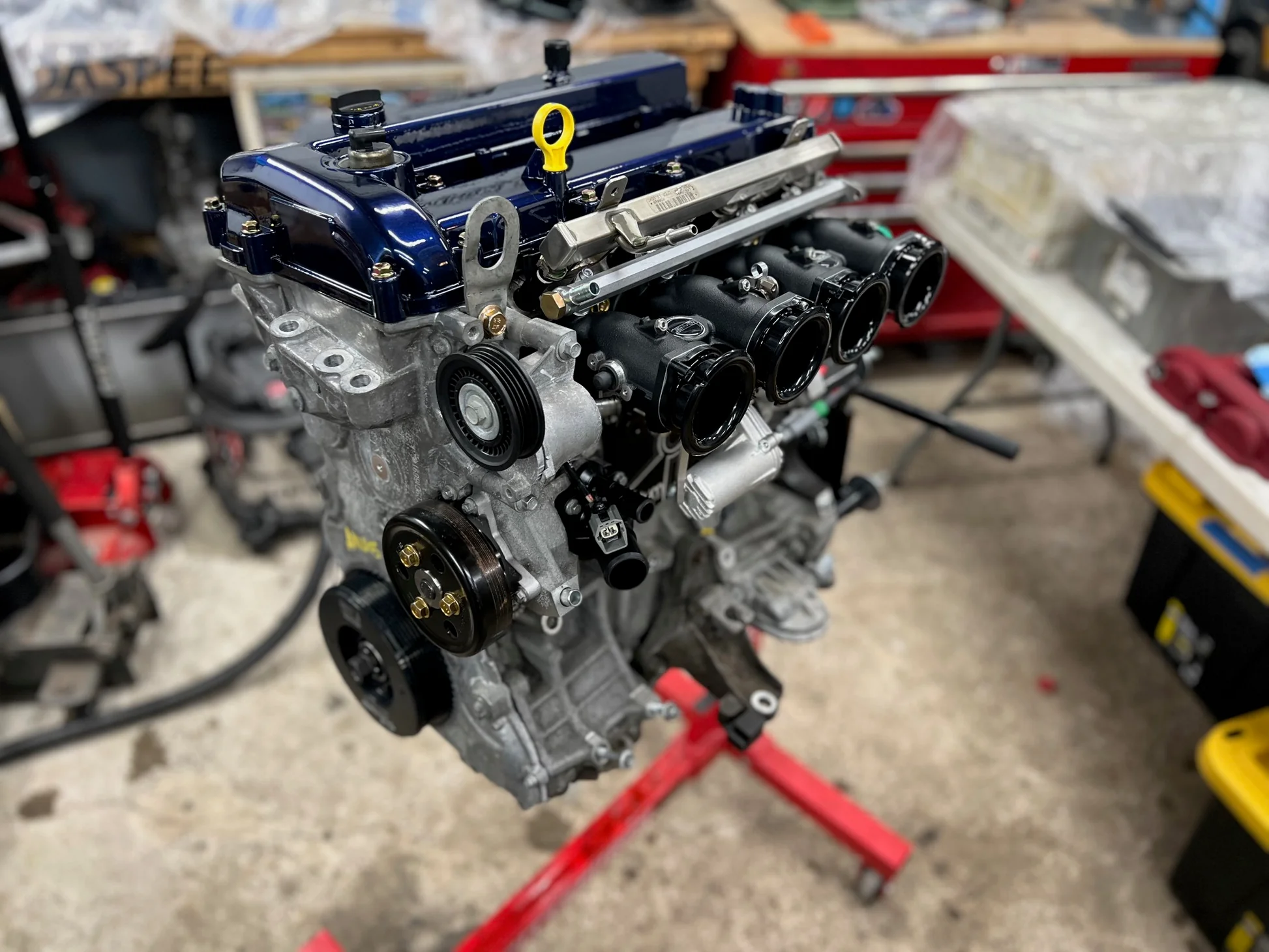
The NA 1.6 (B6ZE) and NA/NB 1.8 (BP-4W/BP-Z3) belong to the same B/BP family found in Mazda 323/Protegé models and in Ford’s Escort GT and Mercury Tracer LTS from 1991–1996. That’s why blocks, heads, and internals line up so well, even if you still need to wear the Miata’s RWD “clothes.”
The NC’s 2.0 (LF-VE) and common upgrade, the 2.5 (L5-VE), are Mazda L-series engines that Ford sold as “Duratec.” That opens a huge donor pool: Mazda 3/6 and Ford Fusion/Focus/Escape/Transit Connect, among others. This is the backbone of the NC 2.5 swap scene.
How the Interchange Exists
On NA/NB, the B/BP lineage is an iron-block, belt-driven DOHC four used in both transverse FWD cars and the longitudinal RWD Miata. Architecture is shared, layout is not. That’s why long/short blocks and internals cross over while sumps, pickups, mounts, and some sensors must remain Miata.
On NC, the L/MZR (“Duratec”) story is a co-development between Mazda and Ford. Same core engines, different badges. The shared DNA makes internal and service parts widely available and explains why NC owners scavenge 2.5-liter donors so successfully, so long as they handle the front-end timing and trigger details.
NA/NB Parts Rundown
For 1.8 BP cars, the prime donors are the 1991–1996 Escort GT and Mercury Tracer LTS, plus Mazda 323/Protegé models with the BP. Expect compatibility on long/short blocks, cylinder heads, and many internal parts. Then swap over your Miata oil pan and pickup for subframe clearance, Miata engine mounts and brackets, and the Miata intake and exhaust for the longitudinal layout. The main thing to watch is sensor generation: BP-4W and BP-Z3 use different cam/crank trigger patterns and CAS arrangements, and your ECU wants what it expects.
Ancillaries often cross, but they’re where small differences bite. Alternators, starters, and pumps may share castings yet differ in bracket ears, pulley offset, or plug clocking. You can make a lot of this work if you verify part numbers and physical orientation before install. NA 1.6 folks will know the flapper-style AFM/VAF world well; the community has documented cross-compatible airflow meters for troubleshooting spares, which underlines Mazda’s parts-bin flexibility even when you’re not mixing with Ford.
Common pitfalls on NA/NB are simple: mismatched trigger hardware that confuses the ECU, accessory plugs that don’t point the way yours do, and any attempt to stuff a FWD pan or mount into the Miata subframe. Keep the Miata externals and the right trigger pattern, and life is good.
NC Deep Dive
The NC is parts-bin heaven because the 2.0 is an L-series and the 2.5 upgrade is another L-series variant. Donor 2.5s live in everyday cars, which keeps costs down.
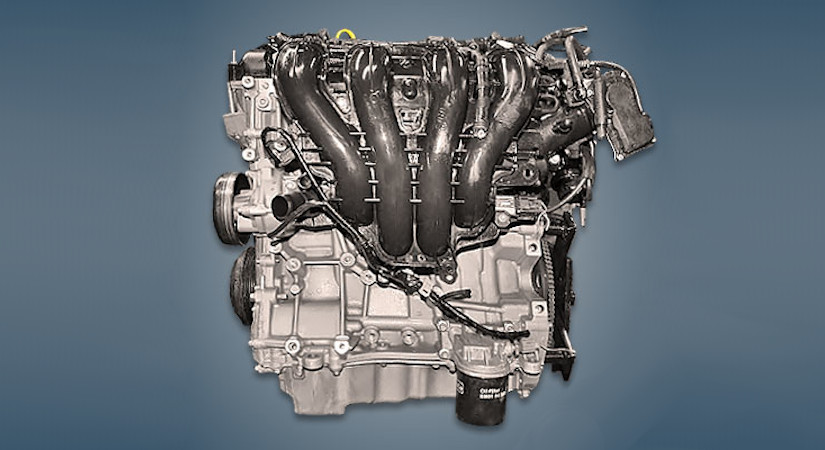
The core 2.5 swap rhythm is consistent: source a healthy L5-VE, transfer over Miata front hardware so the ECU sees the expected trigger wheel, install the Miata oil pan and pickup because the 2.5 pan hits the subframe, and run a Miata clutch and flywheel. Many donor 2.5s were paired with automatics, so remember to add a pilot bearing.
Timing is the make-or-break detail. You’ll retime the engine with the proper locking tools and replace the single-use bolts and diamond washers. While you’re in there, a lot of people delete the balance shafts with a plug kit to reduce rotating mass and future noise points. Once the subframe is dropped, the harness is transferred, and the clutch/trans are bolted up, the swap itself is straightforward if you’ve prepped your bill of materials.
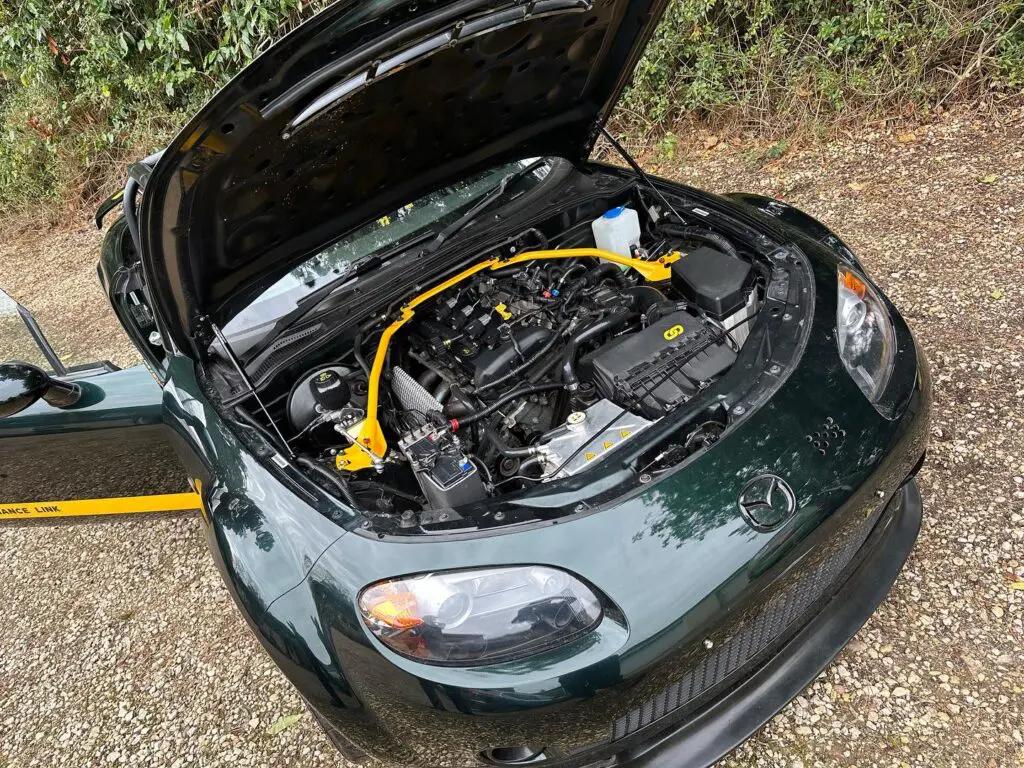
Pitfalls on NC are predictable. If you leave the donor 2.5 oil pan on the engine, it will foul the NC subframe. If you skip timing hardware refresh or the retime procedure, you risk pulley slip and headaches. If you don’t carry over the Miata front trigger gear, or you mix VVT connectors without plan, you’ll chase idle issues, no-starts, or weird codes. Do the front-end right once.
Where Owners Actually Save
Long and short blocks are the headline. On NA/NB, BP cores from Escort GT, Tracer, and 323/Protegé are viable and usually cheaper than Miata-specific listings; you simply redress them with Miata pan, pickup, mounts, and the correct trigger and sensor hardware. On NC, 2.5-liter cores from Mazda 3/6 and Ford family cars are everywhere. Bolt the Miata oiling and front hardware on, retime with fresh single-use bolts, and enjoy the torque bump.
Alternators and starters often interchange, but check bracket ears, clocking, and amphour/output ratings. Airflow hardware is era-specific: early NA 1.6 lives in AFM/VAF land with some parts-bin options; later NA/NB and NC are MAF-based and can mix housings if you understand scaling. Pumps can cross with year and gasket profile caveats. Clutch and flywheel should remain Miata; on NC 2.5 swaps, add the pilot bearing if the donor was an automatic.
Quick Verification
Start by identifying your engine code, B6ZE, BP-4W or BP-Z3, LF-VE or L5-VE, and confirm which family you’re dealing with. Search parts by engine family first and the donor model second, because the family tells you what should match internally. Lock in the Miata-specific externals: oil pan and pickup, engine mounts and brackets, longitudinal intake and exhaust, and the trigger hardware your ECU expects. For NC 2.5 plans, assume you’ll need a timing kit, single-use bolts and diamond washers, a balance-shaft delete kit if you want it, and a pilot bearing. Before you buy a donor, cross-check your list against a full swap walkthrough and make sure you understand the subframe drop, harness transfer, and retime steps.
Risks & Legalities
Emissions and inspection rules vary, and mixing engines and years can trip readiness monitors. Keep your evaporative plumbing, MAF logic, and trigger pattern consistent with your ECU and your local regulations. Physically, the biggest gotcha is trying to run a FWD oil pan or non-Miata pan in a Miata subframe, it won’t clear on NA/NB, and the donor 2.5 pan won’t clear on NC. On NC specifically, timing hardware is not optional; the single-use bolts and diamond washers exist for a reason, and skipping a proper retime is asking for trouble.


