
Lightweight Lithium Batteries for Your Miata
Dropping 15–25+ pounds with a lithium battery is one of the easiest ways to make a Miata feel sharper. This guide breaks down the right chemistries, case sizes, and mounts for NA–ND cars, plus practical tips for cold starts, daily use, autocross, and track reliability.


Shaving 15–25+ pounds from the nose or trunk of a Miata is one of the easiest ways to make the car feel more eager without touching suspension or power. The trick is picking the right lithium chemistry, case size, and mounting so you keep reliable cold starts and stress-free daily use. This guide translates spec-sheet jargon into Miata-specific choices for NA through ND owners, with practical notes for autocross and track events.
Who This Guide Is For
This piece is for daily drivers in mild climates who want a simple, reliable weight reduction; for autocross and HPDE folks hunting low-effort pounds; and for track builds that can live with smaller capacity and slightly stricter charging and storage habits. If you see freezing mornings or leave the car parked for long stretches, you’ll want a lithium with a robust battery management system (BMS), conservative actual amp-hours, and a compatible maintainer. If that sounds like a hassle, a good Group-51R lead-acid or AGM is a perfectly fine, low-risk choice.
How Much Weight Do You Actually Save?
A typical Group-51R lead-acid battery, common on late NB, NC, and ND, weighs around 27–28 pounds. Compact LiFePO4 starter batteries in the ATX20/G20 size usually come in around 3.8–5 pounds. That’s a real-world 20-plus pound drop, and Miata owners regularly report savings of about 23–24 pounds when they pair a tiny lithium with a lightweight tray or mount. In a small, front-engine car, that much mass off the nose is very noticeable.
Battery 101 for Miatas
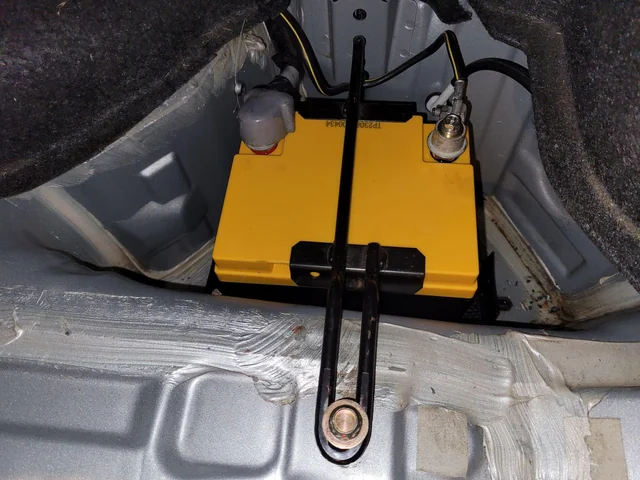
Group-51R is the easy, road-serviceable drop-in for many NB/NC/ND cars and keeps roadside replacements simple. Going smaller with an ATX20/G20-class lithium usually means adding a tray or adapter for secure clamping, confirming post orientation and height, and sometimes tweaking cables for reach. If you move the battery’s location for balance or packaging, be aware that motorsport rules care about placement, covers, and tie-down details.
LiFePO4
For starter duty, LiFePO4 is the favored lithium chemistry because it’s thermally stable and long-lived. The trade-off is that it’s pricier and a bit less energy-dense than some lithium blends, but the safety margin is worth it. Temperature still matters: all lithiums get sluggish when it’s cold, and charging below freezing can damage cells unless the BMS and charger are designed to prevent it. If winter starts are your reality, choose a battery that advertises low-temperature protections and follow its recommendations.
Alternator and Charger Compatibility
Most modern alternators put out a charging voltage that works fine with automotive-oriented LiFePO4 batteries, as long as the BMS is designed for it. The bigger issue is storage. Lithium prefers shallow cycling and doesn’t love being trickle-charged like a lead-acid. Use a maintainer that’s explicitly compatible with LiFePO4 and avoid generic trickle chargers that may ignore the battery’s temperature or voltage limits.
Product Shortlist and When to Use What
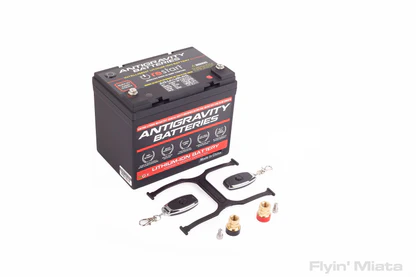
As a pattern, compact LiFePO4 options around the ATX20/G20 size hit a sweet spot for Miatas: roughly four to five pounds, strong pulse current for confident starts, and a small footprint that fits with an adapter tray. If you daily the car and park it for days at a time, favor models with robust BMS protections and a touch more actual capacity. If you mostly autocross or do HPDE and keep the car on a tender, you can bias toward the lighter end. A stock-style 51R lead-acid remains the baseline for cost and convenience comparisons.
Fitment and Mounting from NA to ND
If you want zero hassle, keep the drop-in 51R format and the factory tray and clamp. If you want maximum weight savings, use a purpose-built tray or adapter for the compact lithium, confirm terminal orientation and hood clearance, and make sure nothing can move under load, tech inspectors will pull on the tie-down. Owners commonly pair tiny lithiums with lightweight mounts and see total savings around the mid-20-pound mark.
Reliability and Risk Management
Small actual amp-hour capacity plus parasitic draw is the most common trap. A restart-capable BMS can save you from a dead-in-the-lot moment, and a master cutoff switch is cheap insurance for long sits. Temperature discipline matters too: in cold weather, some brands recommend a brief “wake” routine, turning on a small load for a minute, to warm the cells before cranking. Avoid charging below freezing unless your system explicitly allows it.
Cost–Benefit Computation
Compare your current 51R at roughly 27–28 pounds to a compact lithium at around four to five. That’s a realistic 22–24-pound drop before you count any savings from a lighter tray. In a Miata, that weight is high-value because it sits so far forward. Expect a tiny improvement in front-to-rear balance, slightly crisper transient response, and marginally friendlier brake and tire temps during lapping.
Start with climate. If you ever see freezing mornings, prioritize low-temperature charge protection and a bigger actual amp-hour number. Consider your electrical load: fans, pumps, data loggers, and audio all add up. Demand a BMS with real protections and, ideally, a restart function. Plan storage around actual amp-hours, not Pb-Eq marketing. Finally, confirm that you have the right tray, terminal posts, cable reach, and, if you compete, clear compliance with your rulebook.
Install and Setup Flow
Weigh your current battery and take photos of the wiring and tray. Mock-fit the lithium and tray, confirm the clamp points and that nothing shifts. Check terminal polarity and height against hood clearance. Charge to the manufacturer’s recommended level, then perform a few start-stop cycles and verify resting and charging voltages. If the car will sit, set up a lithium-compatible maintainer. For competition, bring basic product specs to tech in case they ask.
FAQs You’ll Actually Get
Is LiFePO4 safe in the engine bay or trunk?
Yes. It’s among the safer lithium chemistries when paired with a proper automotive BMS and secured correctly. Treat it like any performance part: mount it right and follow the instructions.
Can my alternator charge it?
In most cases, yes. Automotive LiFePO4 batteries are designed for typical alternator outputs. Storage is where you should use a lithium-friendly maintainer.
Will I lose cold-start performance?
In freezing weather, lithium needs technique and BMS help, and sometimes a brief warm-up load. In warm climates, compact lithiums with strong pulse current crank Miatas confidently.
Is the weight loss real?
Absolutely. Expect around 20–25 pounds compared to a typical 51R baseline, which you will feel in how the car changes direction and settles under braking.


